SoilMate · Field reference
Cotton plant tissue sampling guidelines
Sampling timing, field selection, plant part selection and sample handling, adapted from the guidelines by Chris Dowling, Back Paddock Company.
← Return to overviewRecommended timing
Suggested cotton tissue sampling schedule
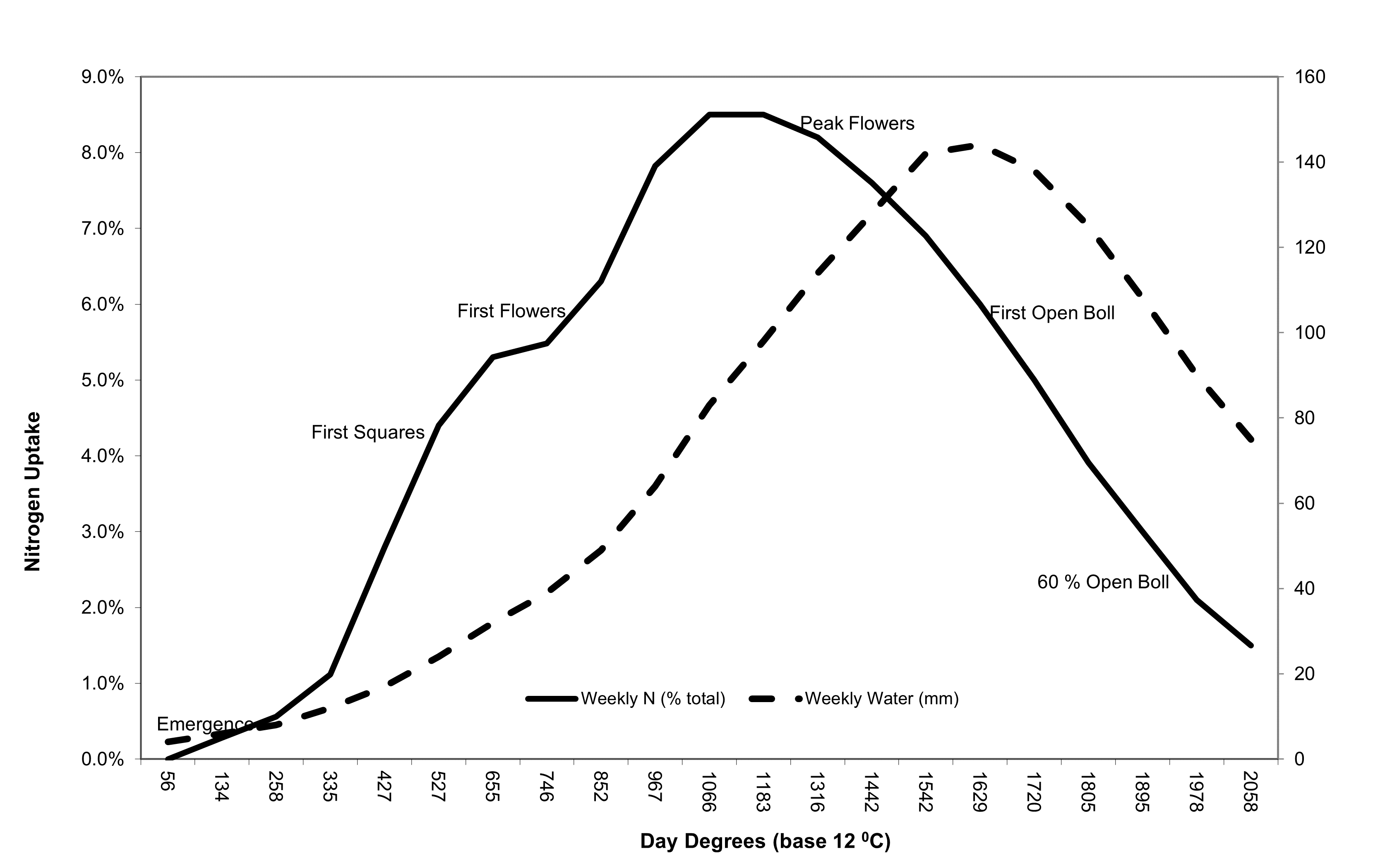
The original guide recommends at least one leaf sample and three petiole samples over the season. Day degrees are cumulative and are supplied here as in the document.
| Sample | Growth stage | Day degrees | Purpose |
|---|---|---|---|
| Leaf (youngest mature blade) | Late vegetative to early squaring | 400–650 | Check nutrient adequacy before rapid uptake. |
| Petiole | Early flowering | 750–800 | N and K baseline. |
| Petiole | During increasing uptake | 900–950 | N and K baseline at the start of rapid uptake. |
| Petiole | First maximum-size boll | 1000–1050 | N and K; main-season top-up decision. |
| Petiole | Later season | 1250–1450 | N management if growing fewer than 25 nodes. |
| Leaf (youngest mature blade) | First open boll | 1450–1700 | Check crop nutrition under peak nutrient demand. |
| Petiole | Cut-out | 1800–1950 | Consider N vigour at defoliation / soil N before growing on. |
Why consistency matters
Plant nutrient concentration reflects water, light, heat and soil nutrient availability. Repeated measurements from consistent locations, tissue positions and conditions provide more useful trends than isolated samples.
Choose representative field locations
- Use reference points that are easy to relocate, ideally near existing soil moisture and soil chemistry observations.
- Avoid atypical sites such as head ditches, tail drains or leaking channels unless they are the subject of the assessment.
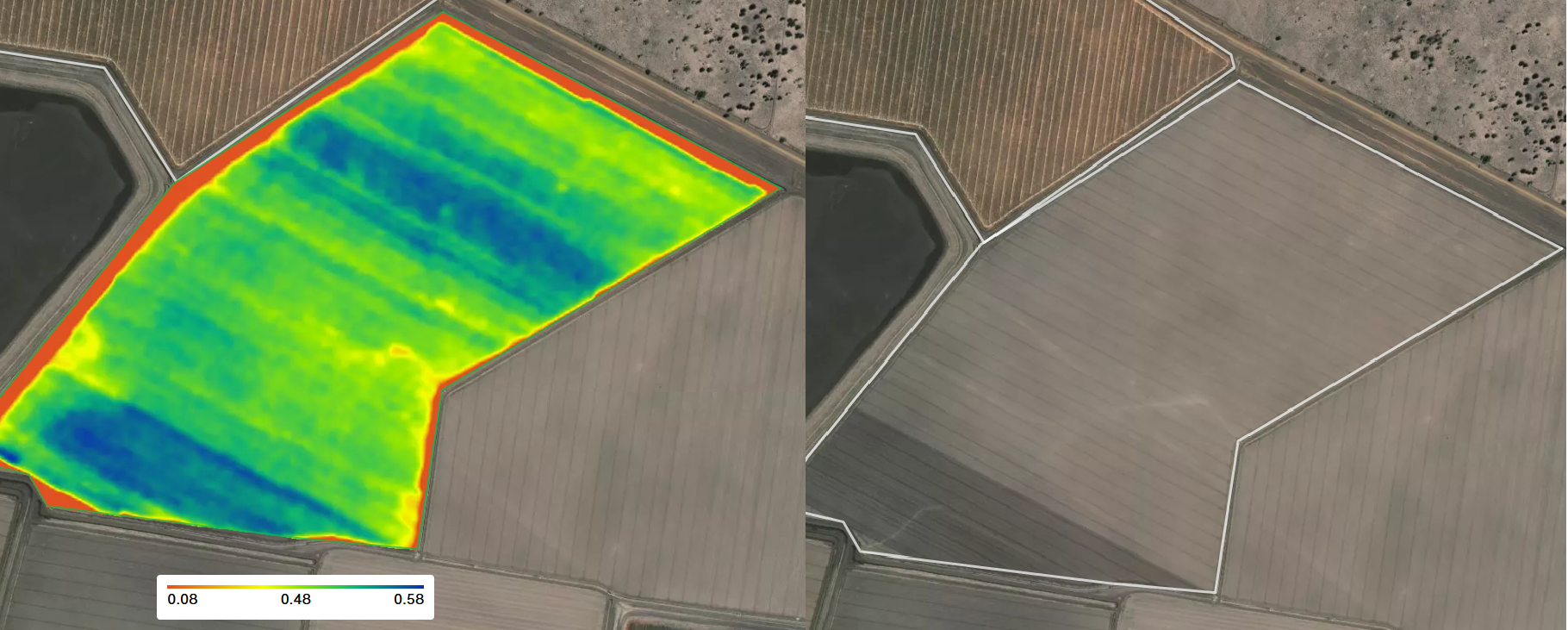
- Yield maps, vigour maps, EM38 and other field layers can support reference point selection.
- Collect samples in a consistent pattern within approximately a 10-metre radius of a reference point.
Which part of the plant?
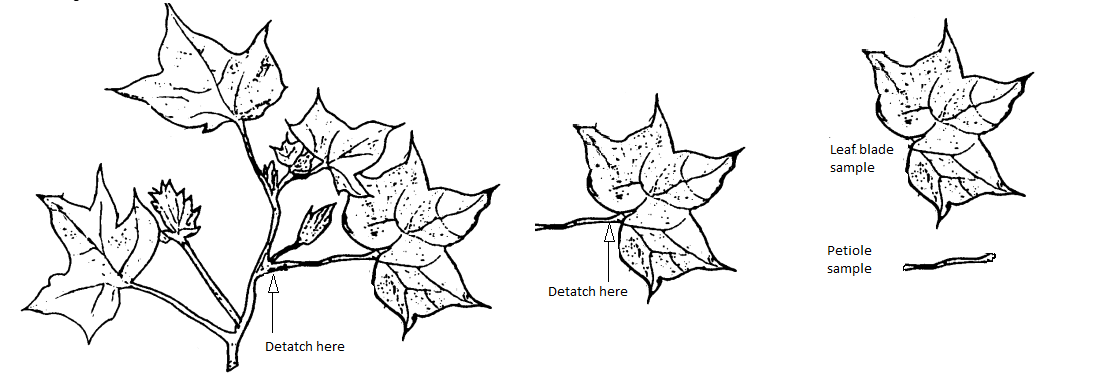
Leaf blade
Collect the youngest mature blade on the main stem, commonly at the third to fifth leaf below the terminal, without its petiole. Full nutrient analysis generally requires at least 200 g of wet leaf blade material.
Petiole
Petiole analysis is most useful for tracking nitrogen and potassium over time, particularly across flowering and boll filling. Laboratories require at least 20 g of wet petioles. Remove petioles from the leaf blade immediately after picking.
Standardise sampling conditions
- Sample when growth is not being restricted by other factors where practical.
- Keep irrigation cycle position, moisture availability, time of day and light conditions consistent.
- Reschedule sampling where conditions fall outside the defined sampling protocol.
Handling and transport
- Use paper sample bags; barcoded bags may be available through service providers or support.
- Keep samples cool in transit to minimise sap bleeding.
- Record days after emergence for leaves and day degrees since sowing for petioles.
- If not using a local SoilMate service provider, arrange express courier to the laboratory.
These guidelines are adapted from the supplied 2023 document. Sampling advice, services and laboratory requirements should be verified for current-season use before publication.
← Return to overview